By NOISE – The Music Shop
Music has the power to transform a space. A well-designed sound system does more than play audio — it creates atmosphere, emotion, and comfort. Yet many people invest in good speakers but never experience their true performance. The reason is simple: speaker placement and room acoustics matter as much as the equipment itself.
At NOISE – The Music Shop, we believe great sound begins with understanding how sound interacts with your home environment. This guide explains how proper speaker placement and acoustic awareness can dramatically improve your listening experience.
Why Speaker Placement Matters
Sound travels as waves. When speakers produce sound, those waves interact with walls, ceilings, floors, furniture, and even people in the room. Poor placement can cause:
- Echo and unwanted reflections
- Boomy or weak bass
- Unclear vocals
- Listening fatigue
- Uneven sound across the room
Proper placement allows sound to reach your ears naturally, creating clarity, balance, and depth.
Understanding Your Room: The Hidden Component
Your room itself is part of the sound system.
Key Factors That Affect Sound:
- Room size and shape
- Wall materials (concrete, glass, wood)
- Ceiling height
- Furniture and carpets
- Windows and reflective surfaces
Hard surfaces reflect sound, while soft materials absorb it. A room filled with glass and tiles may sound bright and echoey, whereas curtains, rugs, and sofas help control reflections.
The Ideal Listening Triangle
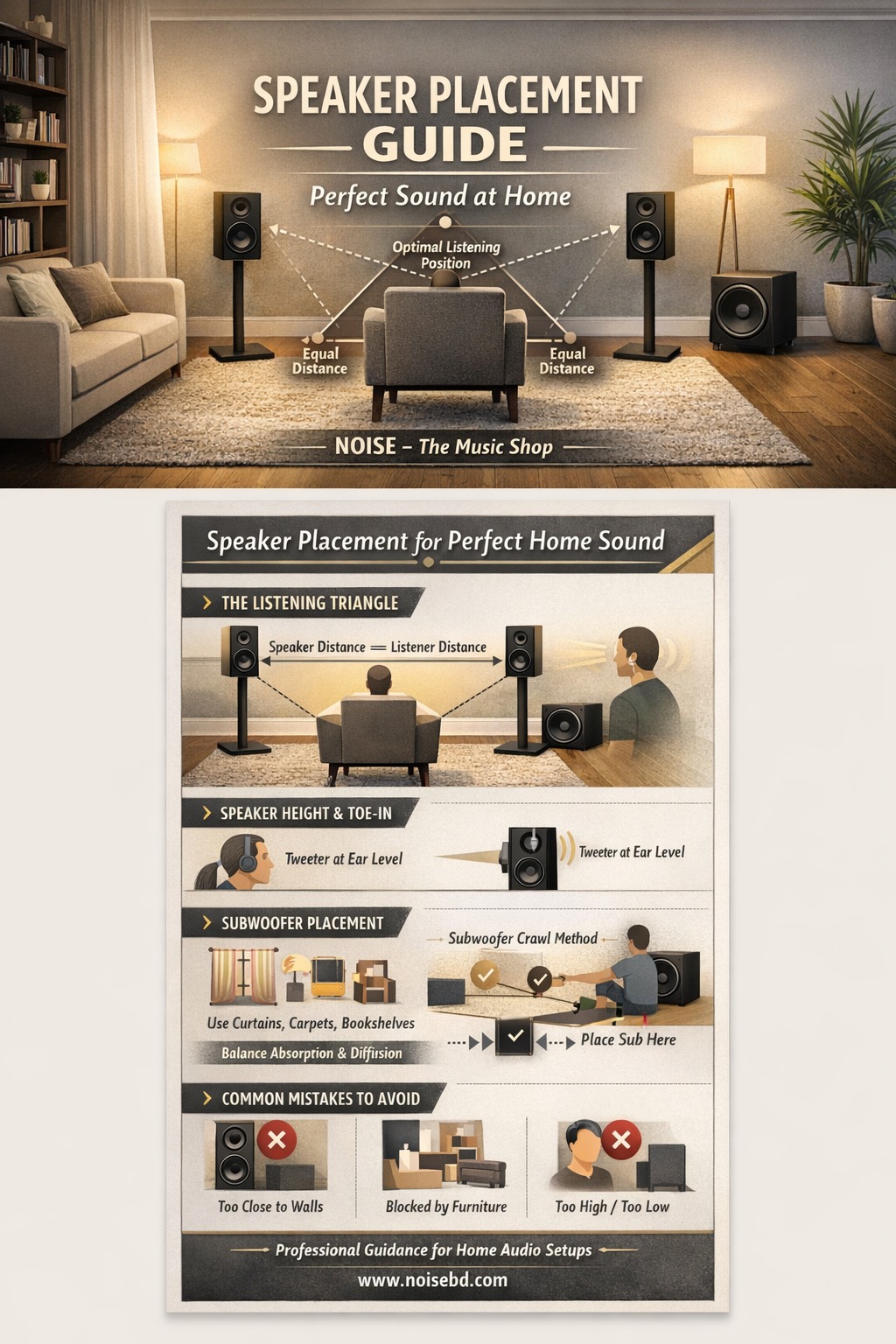
One of the most important concepts in home audio is the listening triangle.
How It Works:
- The two speakers and the listener form an equal triangle.
- Distance between speakers ≈ distance from listener to each speaker.
This arrangement creates:
Balanced stereo imaging , Clear vocals and centered between speakers , Realistic soundstage
Distance from Walls: Finding the Balance
Placing speakers too close to walls is one of the most common mistakes.
Recommended Guidelines:
- Keep speakers 30–90 cm away from the back wall (if possible).
- Avoid placing speakers directly in corners.
- Maintain equal distance from side walls for stereo balance.
Walls amplify bass frequencies. While some reinforcement is useful, excessive proximity causes muddy or overpowering bass.
Speaker Height and Ear Level Alignment
Sound clarity improves significantly when speakers align with ear height.
- When seated.
- Use stands or wall mounts if necessary.
- Avoid placing speakers directly on the floor unless designed for it.
Proper height improves vocal clarity and detail.
Toe-In Angle: Directing the Sound
“Toe-in” refers to angling speakers slightly toward the listener.
General Rule:
- Start with speakers facing forward.
- Gradually angle them inward until vocals sound focused and natural.
Too much angle narrows the soundstage; too little reduces clarity.
Nearfield vs Farfield Listening
Nearfield Listening
- Short distance
- Less room influence
- Highly detailed listening
Farfield Listening
- Larger soundstage
- More room interaction
- Cinematic experience
Choose based on room size and listening preference.
Managing Reflections for Cleaner Sound
Early reflections from walls and ceilings can blur sound quality.
Simple Home Solutions:
- Add curtains or fabric panels near reflective walls.
- Use carpets or rugs on hard floors.
- Bookshelves act as natural sound diffusers.
- Avoid large empty walls facing speakers.
These small adjustments often improve sound more than upgrading equipment.
Subwoofer Placement Tips
Low frequencies behave differently from mid and high frequencies.
Best Practices:
- Avoid placing the subwoofer directly in a corner unless tuning is adjusted.
- Try the “subwoofer crawl” method:
- Place subwoofer at listening position.
- Walk around the room.
- Find where bass sounds smooth and balanced.
- Place the subwoofer there.
This helps achieve even bass distribution.
Common Speaker Placement Mistakes
❌ Speakers pushed against walls
❌ Unequal distances from listener
❌ Blocking speakers with furniture
❌ Placing speakers too high or too low
❌ Ignoring room acoustics
Correcting these alone can transform your system’s performance.
Creating Emotional Listening Experiences
Good sound is not only technical — it is emotional. Proper placement allows you to experience:
- Depth and realism in music
- Natural vocal presence
- Comfortable long listening sessions
- Immersive movie experiences
- A peaceful and relaxing environment at home
When sound is balanced, listening becomes effortless.
Professional Calibration Makes the Difference
While basic placement improves most systems, professional tuning takes performance further through:
- Acoustic evaluation
- Speaker positioning analysis
- Sound calibration and balancing
- Room optimization
At NOISE – The Music Shop, we help clients design systems that match both their space and listening preferences — ensuring music sounds the way it was meant to be heard.
Final Thoughts
Great sound is not about louder volume or more expensive equipment. It is about harmony between speaker, space, and listener.
With thoughtful placement and simple acoustic awareness, any home can become a refined listening environment — one that brings peace, enjoyment, and lasting satisfaction.
NOISE – The Music Shop
Where Music Meets Intelligent Sound Design.