
The Science Of Clear Sound: Acoustic Design For Mosques, Churches & Conference Rooms
The Science of Clear Sound
Acoustic Design for Mosques, Churches & Conference Rooms
By NOISE – Where Sound Meets Science
Why Good Sound Fails in Beautiful Buildings
Across Bangladesh and many parts of the world, mosques, churches, and conference halls are often architecturally impressive — high ceilings, domes, marble floors, glass, and large open volumes. Yet, despite investing heavily in sound systems, many of these spaces suffer from echo, distortion, feedback, and unclear speech.
The reason is simple but often overlooked: sound is a physical phenomenon, and without scientific acoustic planning, even the best audio equipment cannot perform properly. Good sound is not created by speakers alone — it is shaped by architecture, materials, geometry, and system design working together.
This guide is written to educate architects, committees, builders, and decision-makers on why acoustic problems occur and how they can be solved, specifically for mosques, churches, prayer halls, and conference rooms.
Understanding Sound Behavior in Large Spaces
When a person speaks, sound travels in waves. In enclosed spaces, these waves:
- Travel directly to listeners
- Reflect off walls, ceilings, floors, and domes
- Interfere with each other over time
If reflections return too late or too strongly, the listener hears echo. If sound stays in the room too long, it creates excessive reverberation, causing words to overlap and lose clarity.
In spaces designed mainly for speech and prayer, clarity is more important than loudness. A space that is visually grand but acoustically untreated will always struggle with intelligibility.
Core Acoustic Problems in Mosques, Churches & Conference Rooms
1. Excessive Reverberation
Large prayer halls and worship spaces often have high ceilings and hard surfaces. This allows sound to bounce repeatedly, extending the reverberation time beyond what is suitable for speech. The result is unclear sermons, distorted announcements, and listener fatigue.
2. Echo from Hard, Flat Surfaces
Parallel walls, flat ceilings, and bare concrete surfaces reflect sound directly back into the room. When the delay between original and reflected sound becomes noticeable, echo occurs.
3. Domes and Curved Architecture
Domes and concave surfaces — common in religious architecture — can focus sound into specific spots, creating areas that are too loud while others remain unclear. This uneven distribution is one of the most common acoustic failures in mosques and churches.
4. Poor Sound System Integration
Installing a powerful PA system without considering room acoustics often makes problems worse. Increasing volume does not solve echo — it amplifies it.
Mosque-Specific Acoustic Considerations
Mosques are primarily speech-focused spaces, where clarity of the Imam’s voice is essential. While a sense of spacious reverberation can enhance recitation, excessive echo reduces understanding.
Key considerations:
- Domes must be acoustically treated or segmented
- Mihrab areas should avoid concave sound-focusing shapes
- Distributed speaker systems provide better clarity than a single loud source
- Prayer carpets contribute positively to sound absorption
A scientifically balanced mosque acoustic design preserves spiritual ambience without sacrificing intelligibility.
Church & Worship Hall Considerations
Churches often host both speech and music, requiring a careful balance. Unlike conference rooms, some reverberation may be desirable for hymns and choirs, but uncontrolled reflections still harm speech clarity.
Best practices include:
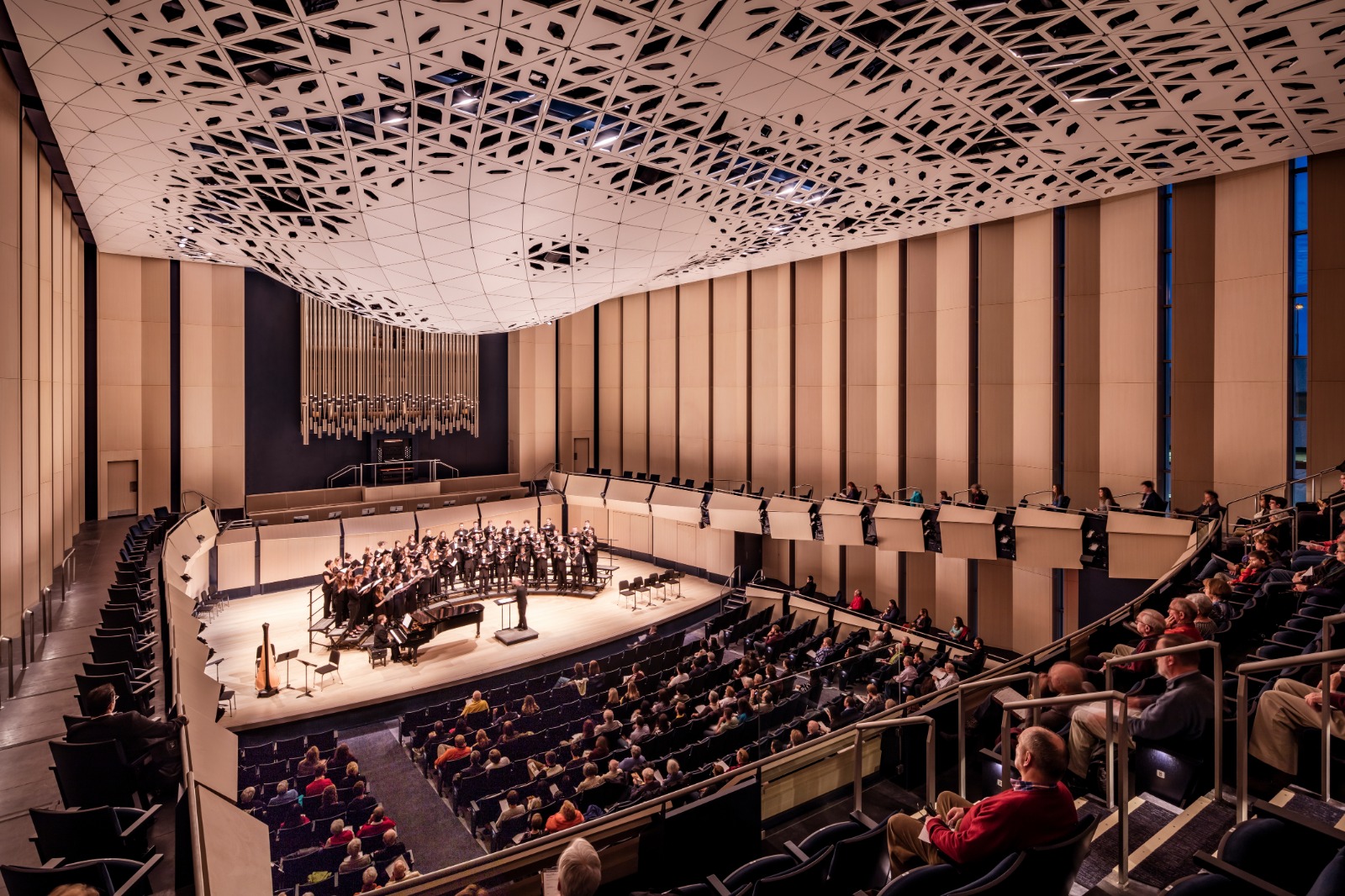
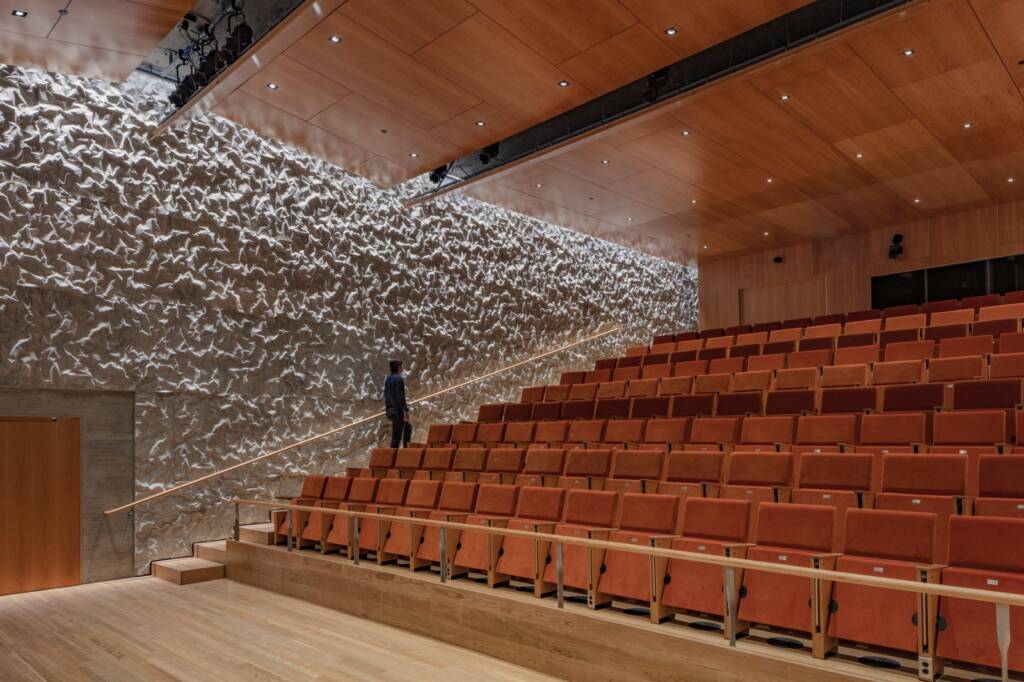
- Diffusive wall treatments to scatter sound evenly
- Absorptive materials placed strategically, not excessively
- Speaker placement aligned with seating layout
Conference Room & Corporate Hall Acoustics
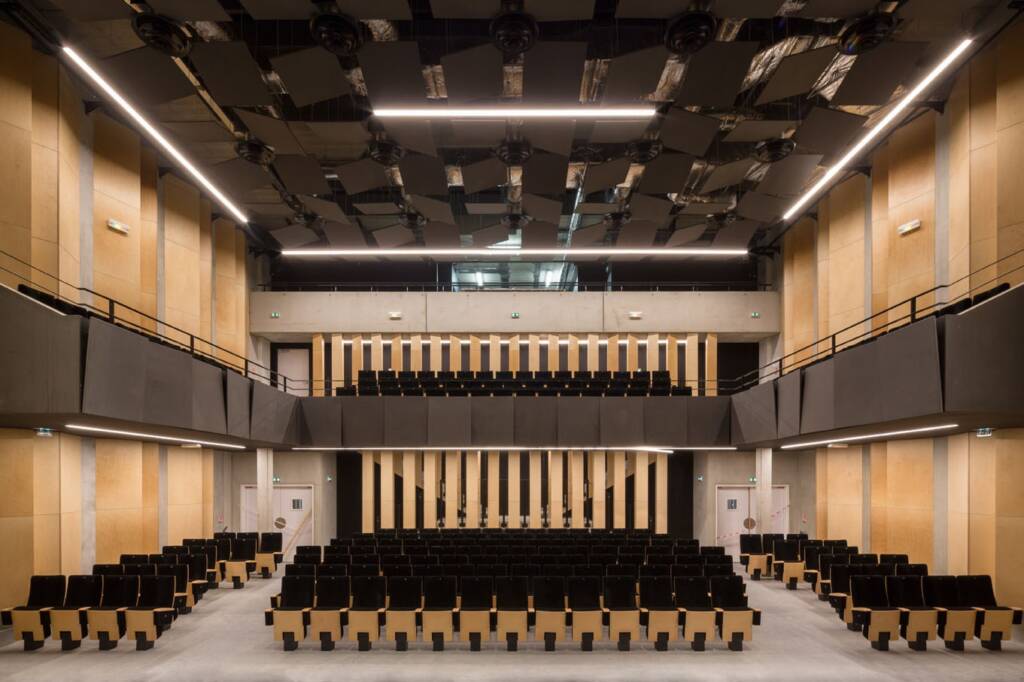
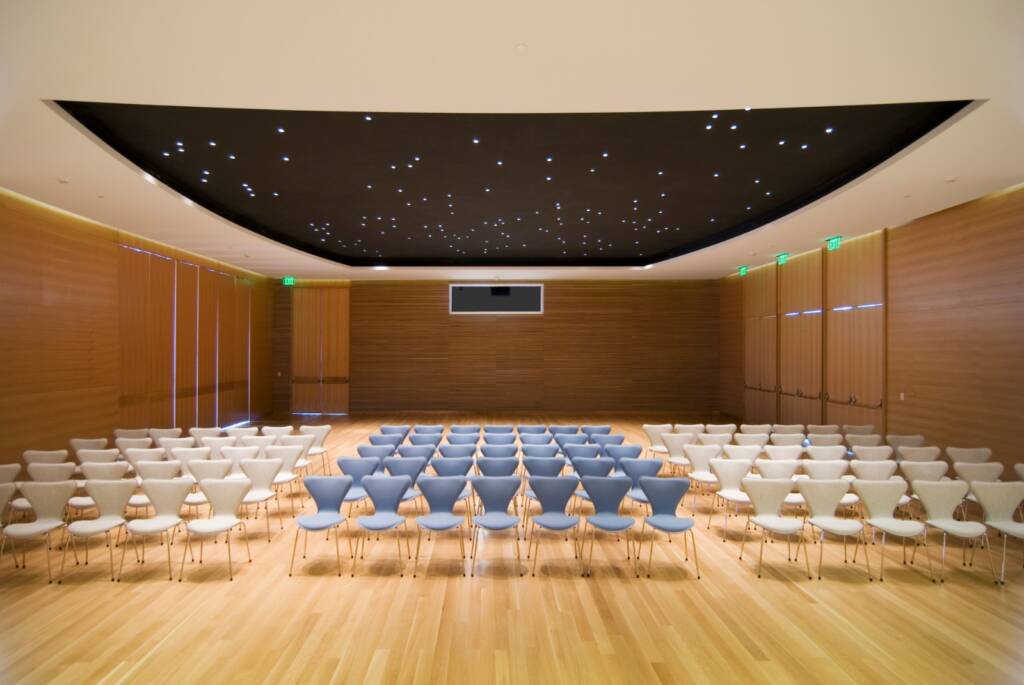
Conference rooms demand maximum speech intelligibility. Even small acoustic flaws become noticeable during meetings, presentations, and video conferences.
Important principles:
- Lower reverberation time than worship spaces
- Acoustic ceilings and wall panels are essential
- Avoid glass-heavy interiors without treatment
- Use calibrated microphones and DSP-controlled sound systems
In corporate environments, poor acoustics directly affect productivity and professionalism.
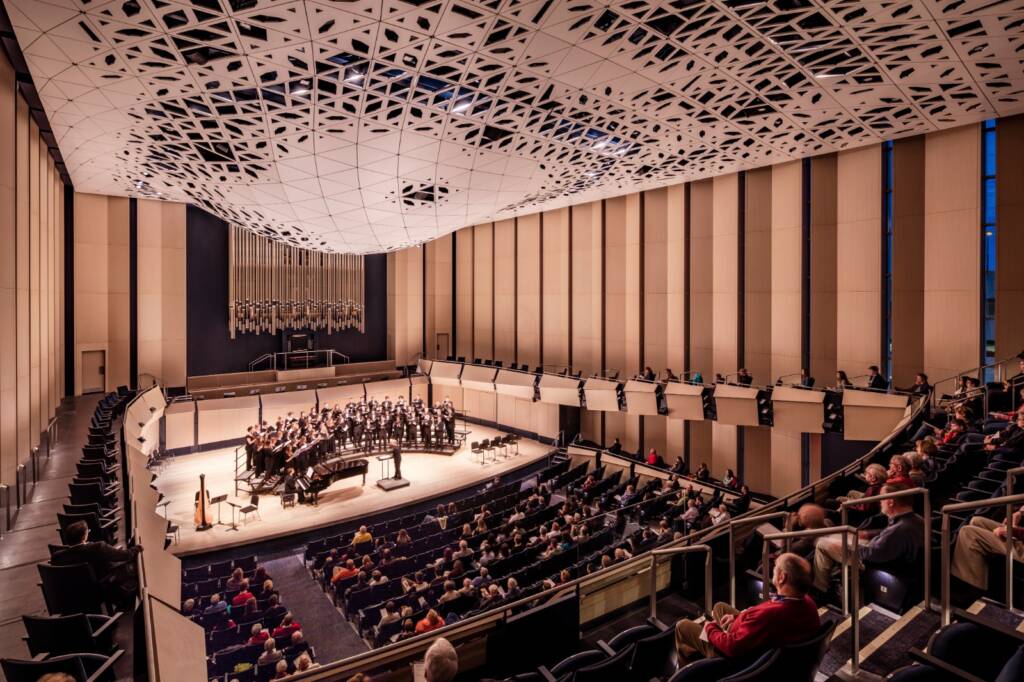
Architectural Strategies for Acoustic Control
Geometry Matters
- Avoid long, parallel walls
- Use angled or broken surfaces to reduce reflections
- Segment large curved surfaces
Material Selection
Effective acoustic spaces use a balance of materials:
- Absorptive materials reduce echo and reverberation
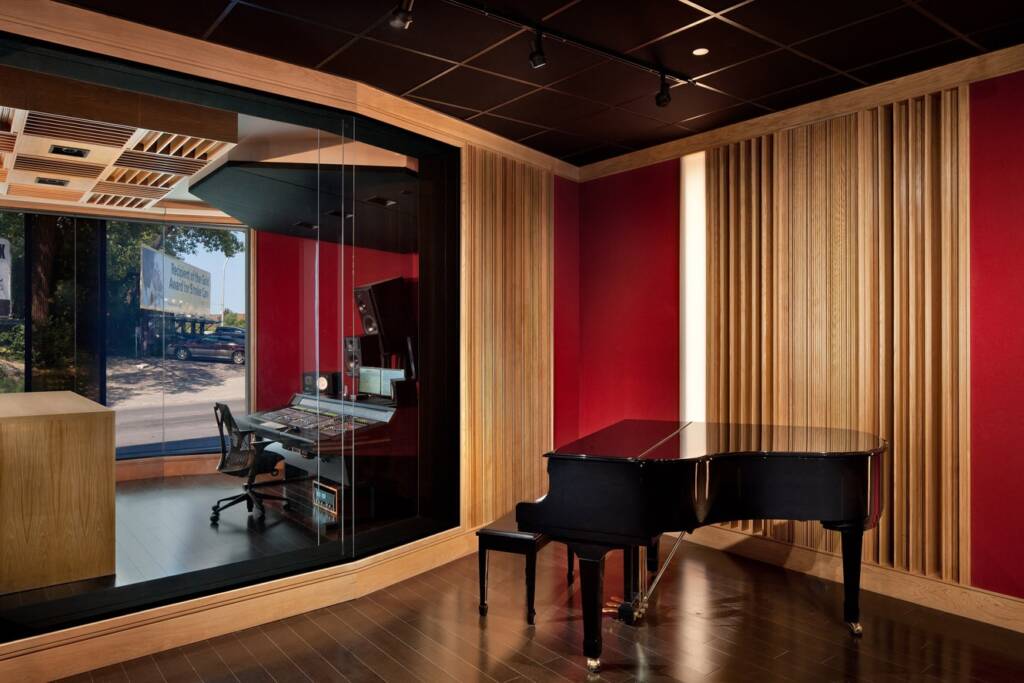
- Diffusive elements scatter sound evenly
Overuse of marble, glass, and tiles without treatment is a common mistake.
Ceiling Design
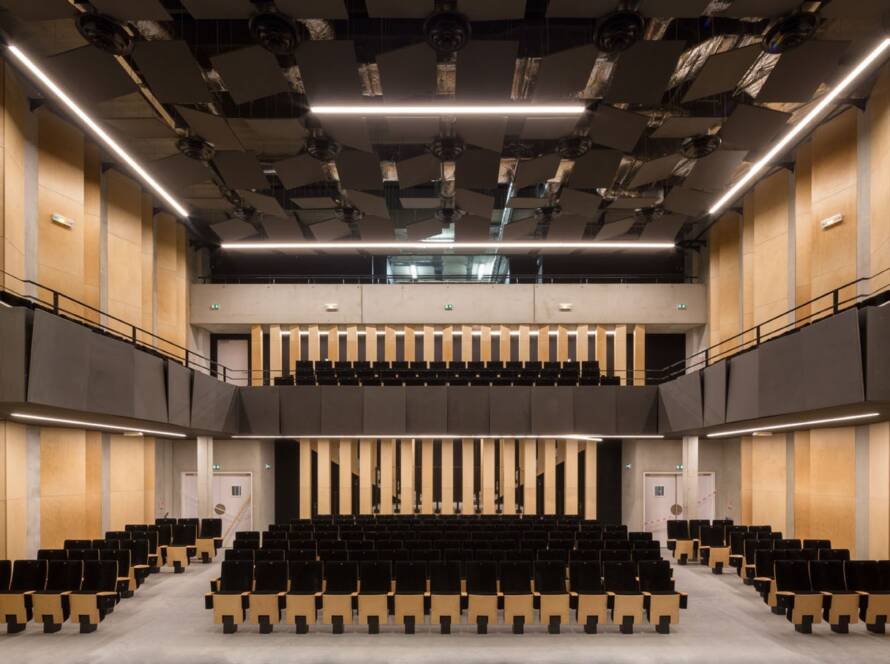
- Suspended acoustic ceilings improve clarity
- Acoustic clouds and baffles help in high-volume spaces
- Reflective domes should never remain untreated
Sound System Design: Completing the Acoustic Picture
A well-designed PA system works with the room, not against it.
Key principles:
- Use multiple speakers at controlled volume levels
- Aim speakers toward listeners, not reflective surfaces
- Apply digital signal processing (DSP) for tuning and delay
- Match microphone types to room acoustics
Professional calibration after installation is critical for success.
Common Mistakes to Avoid
- Treating acoustics as an afterthought
- Increasing volume to fight echo
- Copying designs without acoustic evaluation
- Ignoring acoustic upgrades during renovation
The NOISE Approach
At NOISE, we believe that clear sound is a result of scientific planning, thoughtful design, and proper system integration. As a retail music and public address system specialist, we help clients understand that successful sound solutions begin long before equipment installation.
Whether designing a mosque, church, prayer hall, or conference room, early acoustic consideration ensures:
- Clear speech
- Even sound distribution
- Reduced feedback and distortion
- Long-term satisfaction
Final Thought
Sound carries meaning, guidance, and connection. When spaces are designed with acoustic science in mind, every word reaches its audience with clarity and respect.
NOISE — Supporting Architecture with Intelligent Sound Design.