
Understanding Sound in Large Spaces
In any enclosed space — especially large ones used for worship, lectures, or public gatherings — sound does not just travel directly from the speaker to the listener: it travels in waves that reflect, scatter, interfere, and sometimes resonate against surfaces. Without proper planning, these reflections can create echo, long reverberation /distortion) , uneven sound distribution, and poor intelligibility of speech.
Why Echo and Distortion Happen
1. Excessive Reflections
When sound hits hard, flat surfaces (like plain walls, domes, or ceilings made of concrete or tiles), a large portion of the sound energy bounces back into the room. If the time delay between the direct sound and reflected sound exceeds approximately 50–70 milliseconds, listeners perceive this as an echo.
2. Too Much Reverberation
In large halls with high ceilings and many hard surfaces, sound continues to bounce around, causing a long persistence of sound after it’s produced. This Masks speech clarity, making sermons, speeches, or announcements hard to understand.
3. Geometry Problems
- Parallel walls create standing waves and strong reflections that make specific frequencies louder or softer depending on location.
- Concave shapes like domes and arches can focus sound, causing hotspots and uneven distribution. In some famous architecture like St. Paul’s Cathedral, concave geometry even creates whisper-gallery effects where sound travels around the space in odd ways.
4. Uncontrolled Resonance
Certain objects (windows, suspended decorations, columns) vibrate at specific frequencies and add unwanted resonant noise, which blends with the intended sound and distorts clarity.
Architectural Design Strategies to Improve Acoustics
Good acoustic design starts at the architectural planning phase — long before speakers or PA systems are installed. Here are key principles:
1. Shape and Volume Control
- Avoid long parallel surfaces; use splayed or angled walls to scatter reflections.
- Break up large concave surfaces into smaller facets to reduce focusing of sound energy.
2. Reverberation Time Management
Every space has an ideal reverberation time (RT) — the time it takes for sound to decay by 60 dB.
- Too long → words blur
- Too short → sound feels ‘dead’
The best value depends on the function: prayer halls and mosques may tolerate longer RT than a conference hall, but excessive reverberation still harms intelligibility. Appropriate materials and treatment help control RT.
3. Surface Materials
Use a mix of absorptive and diffusive surfaces:
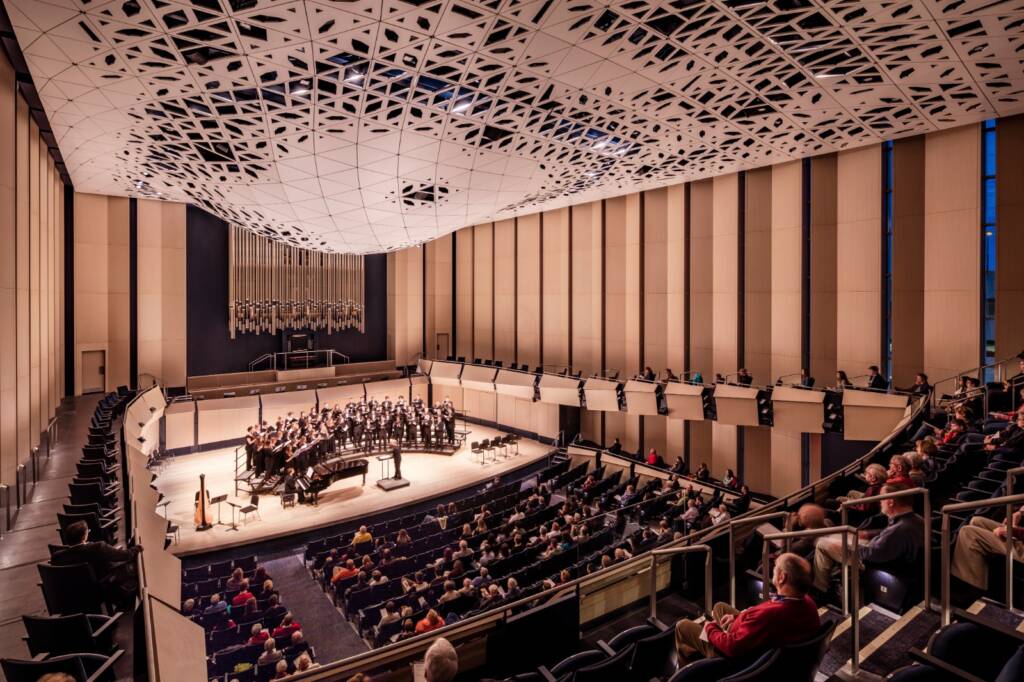
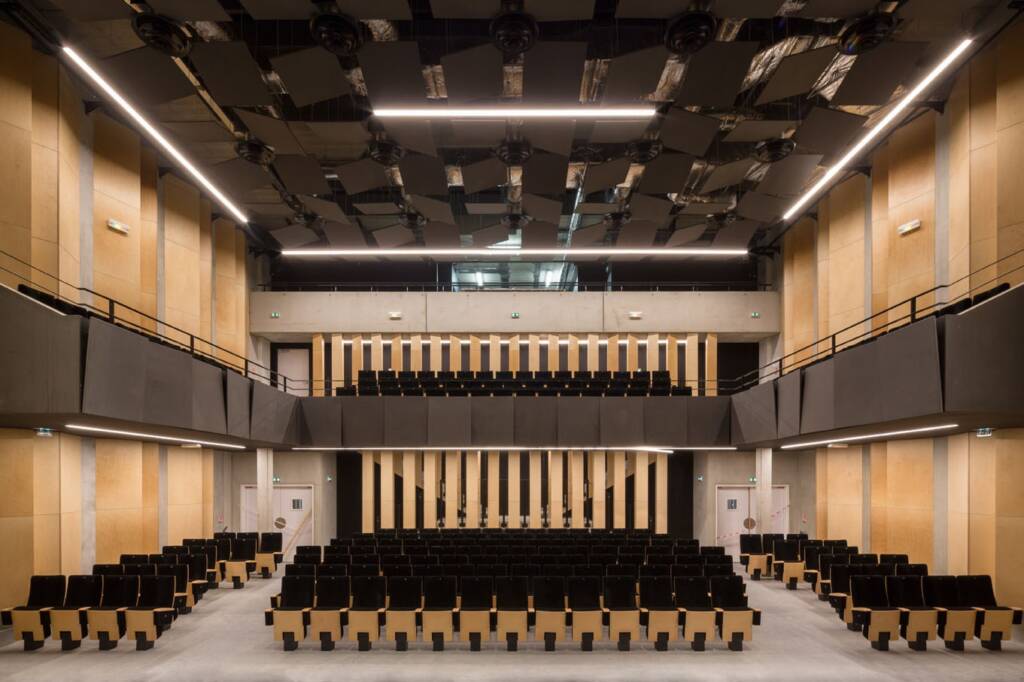
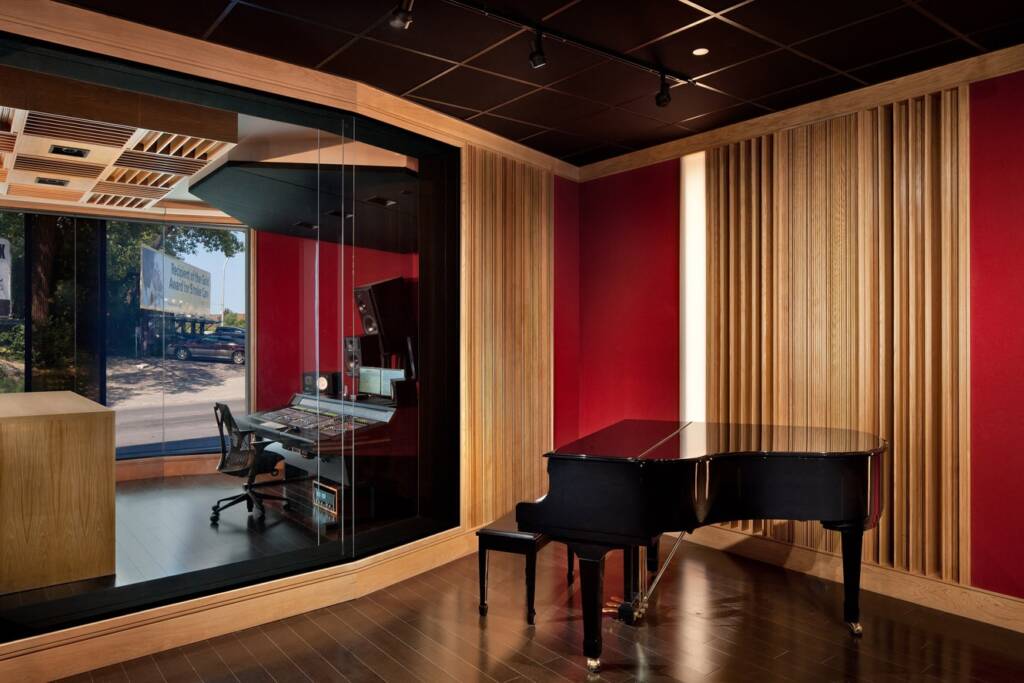
- Absorptive materials (acoustic panels, carpets, porous finishes) soak up reflected sound, reducing echo.
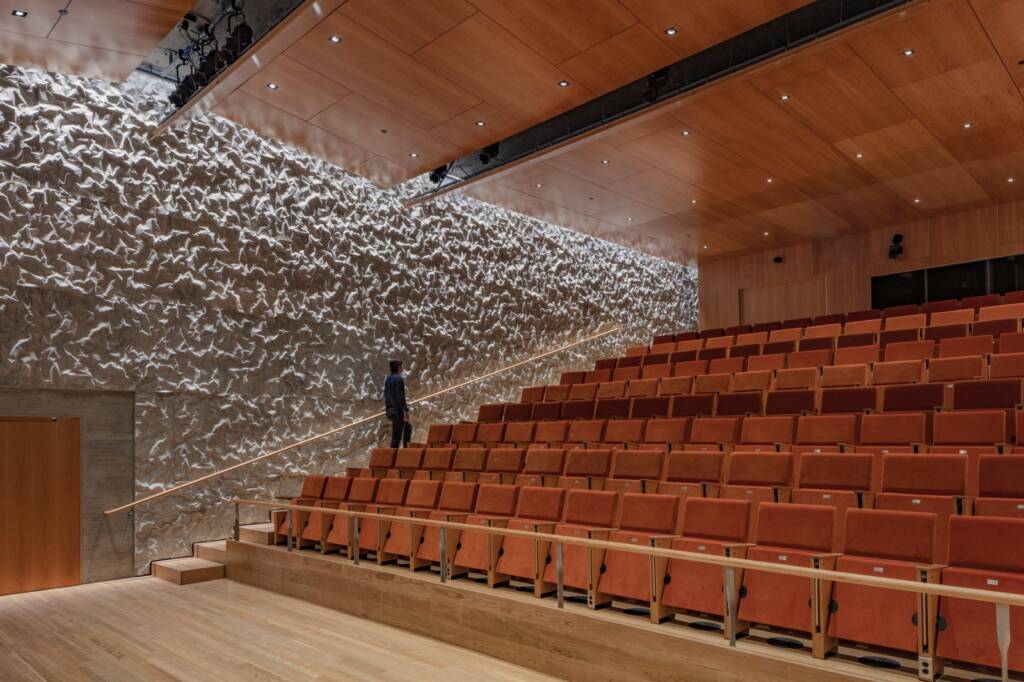
- Diffusers scatter sound evenly, helping listeners hear the same energy level throughout the space.
4. Diffuse Reflection Instead of Harsh Reflection
Diffusers prevent strong direct reflections from hitting surfaces straight on. This transforms what would be harmful echoes into softer reverberation that decays more evenly.
Sound System Integration
Even in a perfectly designed room, an improperly installed or tuned Public Address (PA) system can make acoustic problems worse. The placement and calibration of speakers matter:
Placement
- Speakers should be placed and angled so direct sound reaches listeners before significant reflections.
- Avoid pointing speakers at large bare walls or highly reflective surfaces.
Tuning and Calibration
Digital processing (like equalization and delay correction) can help manage sound clarity and coverage, especially in large irregular spaces.
Advanced Enhancement Systems
Modern acoustic enhancement systems (such as LARES) use distributed microphones and processing to shape the acoustic field itself, improving clarity without purely relying on architectural changes.
Combined Architectural & Acoustic Process
Great acoustic performance is a collaboration between architects, acoustic consultants, and audio engineers:
- Initial Assessment — Evaluate room volume, shape, and surface materials.
- Modeling & Simulation — Use acoustic modeling tools to predict reflection patterns and reverberation before construction.
- Material Selection — Choose absorbers, diffusers, and finishes based on scientific acoustic properties.
- Sound System Design — Select speaker types and positions that match architectural design.
- On-Site Tuning & Testing — After installation, measure actual performance and adjust as needed.
Key Takeaways From This Topics
Echo & distortion are not random — they result from predictable sound-wave behavior in large, reflective spaces.
Architectural design can greatly reduce problems before installation of audio equipment.
Materials with absorption and diffusion help target specific acoustic issues like long reverberation and uneven distribution.
Professional design & tuning — from walls to loudspeakers — is essential for intelligible, clean sound in mosques, prayer halls, and conference rooms.s balance remains the foundation of creating spaces that truly resonate with their audiences.